Skip to content
Tickets for the 2027 OCCA Summer School are selling fast!
Introduction

Interview

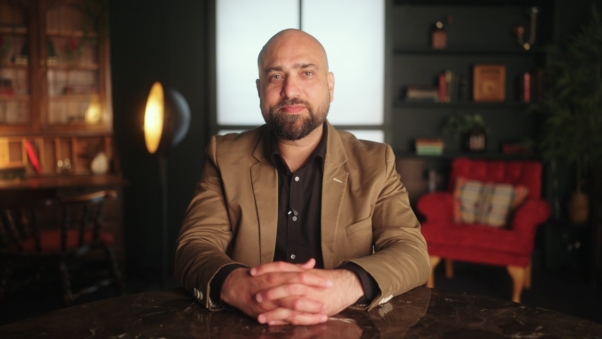
This interview serves as an introduction to the course. It is a conversation between Charlie Styles, Associate Speaker with OCCA The Oxford Centre for Christian Apologetics, and Church pastor, and Brother Mann from London City Mission. This interview establishes the context for the series. It explores Brother Mann’s story and why an understanding of the Sikh faith is important for any Christian who shares community with Sikh brothers and sisters.

Session 1

The Birth of Sikhi: Exploring the Historical and Cultural Context

Question: What inspired the rise of Sikhi?

What was happening in India that created the environment for Sikhi to emerge? This session explores the social, political and religious landscape of North-West India, including caste, Hindu reform movements, Islam, Bhakti and Sufism. By understanding these influences and the questions people were wrestling with, we can better understand why Sikhi emerged and what it sought to address.

Session 2

The Life and Teachings of Guru Nanak

Question: Who Was Guru Nanak, and What Can We Learn from His Teachings?

Who was Guru Nanak, and what shaped his revolutionary vision? Session two traces his early life, his challenge to caste and ritual, and the founding principles of Sikhi: Naam Japo, Kirat Karo, and Vaṇḍ Chakkō. Along the way, we’ll draw thoughtful comparisons with Jesus’s own teachings, building a richer foundation for genuine, respectful conversation between Sikhs and Christians.

Session 3

From Reform to Revolution – The Evolution of Sikhi

Question: How did the Sikh Gurus Shape Sikhi Identity and Beliefs?

Why do Sikhs carry swords, wear turbans, or call themselves “lions” and “princesses”? Session three traces the development of the faith beyond Guru Nanak to understand how nine further Gurus transformed a peaceful reform movement into a distinct faith with its own scripture, warriors, and visible identity. Understanding this evolution, from persecution to the Khalsa, helps us make sense of Sikh practices we encounter today, and converse with real insight rather than assumption.

Session 4

Sikh Scriptures – The Canonisation of the Guru Granth Sahib

Question: What are the Sikh Scriptures and how were they formed?

How did the Guru Granth Sahib go from handwritten pothis to becoming the Sikh’s eternal, living Guru? In session four, we trace the journey of compilation and canonisation, from Guru Nanak’s earliest hymns through to Guru Gobind Singh’s final definitive version. Exploring how sacred texts are cherished across different religious traditions reveals a universal longing in the human heart—to seek, to understand, and to draw near to the divine.

Session 5

Sikh Scriptures – Role and Purpose

Question: What is the significance of the Guru Granth Sahib, and how does it guide Sikh life?

How does the Guru Granth Sahib actually shape daily Sikh life? Why enthrone, dress, and even cremate worn-out copies as if performing a human funeral service? We’ll explore its role in worship, and why it’s treated as a living presence. Understanding this reverence and drawing thoughtful comparisons with how Christians engage with the Bible, helps us reflect on Sikh practice thoughtfully, without confusion or compromise.

Session 6

The Gurdwara – Worship, Community, and Identity

Question: What role does the Gurdwara play in Sikh life and worship?

What actually happens when you step inside a Gurdwara? In session five, we examine this space of worship, and community, identifying similarities and differences with the Christian Church. From Guru Nanak’s first gathering to the global Gurdwara network today, we’ll trace how this space shapes Sikh identity from birth to death.

Session 7

Wrongdoing, Forgiveness, and death– A Sikh and Christian Perspective

Question: What is wrong with us?

What’s really wrong with us, and what can fix it? In this final session, we dig into terms like ‘ego’, ‘karma’, ‘sin’ and ‘grace’, comparing how Sikhi and Christianity each diagnose the human condition and point toward healing. Drawing on his own journey from Granthi to follower of Jesus, Brother Mann explores where the two traditions overlap and where they part ways. It’s a fitting close to the series, and a starting point for honest, respectful conversation with Sikh friends and neighbours.

Course info

Pricing: £100

We want this course to be available to anyone. If the cost is a barrier for you, you can apply for a bursary. Want to help others be able to access courses like this? Support OCCA and raising up the next generation of apologist-evangelists.

The course is available for online self-study. You can go through the videos at your own pace and you will have access to a detailed study guide to help you ask questions and explore further.

Brother Mann was born into a devout Sikh family. His family raised him to be a “granthi” within the Sikh faith.

A granthi holds the privileged position of being the reciter of the Sikh holy book, the “Guru Granth Sahib.”  In 1997, he became a disciple of Jesus Christ. At the age of 20, he committed his life for God’s service.

Brother Mann worked in teaching, training, and translation before serving on his first church-plant in India in 2015. Called to London in 2022 he now works with London City Mission in Northwest London supporting churches to share the good news of Jesus Christ with Sikhs, Hindus and Muslims. This work focuses on building bridges of mutual understanding through conversations, ranging from public seminars to one-to-one dialogue.

Hear from us